
Hamilton School Continues Rapid Growth With New Faculty Hires
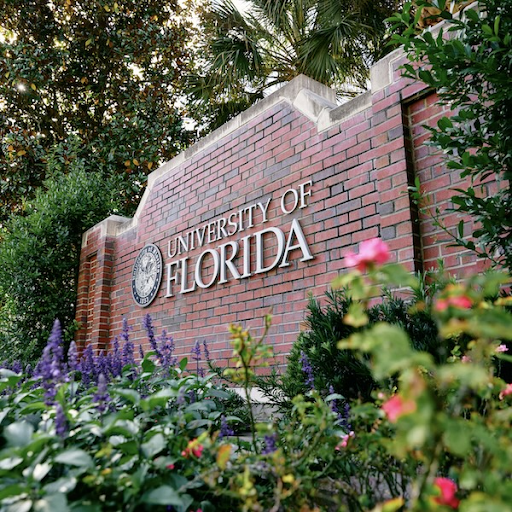
The University of Florida’s Hamilton School for Classical and Civic Education has announced 21 faculty additions for the 2026–27 academic year, including 14 newly hired professors, one visiting professor, one professor of practice, two lecturers, and three previously announced professors who are arriving on campus this year.
The appointments bring wide-ranging expertise in philosophy, political economy, history, international relations, economics, religion, constitutionalism and classical thought. Together, the new and arriving faculty will strengthen the Hamilton School’s commitment to rigorous scholarship, outstanding teaching and the preparation of leaders for a free society.
The new faculty additions will deepen instruction across the school’s undergraduate majors and minors in philosophy, politics, economics & law; great books & ideas; war, statecraft & strategy; American government, history, literature & law; and Christian thought and culture (minor only), while supporting the continued growth of the school’s extracurricular academic programs and dedication to research.
This fall, the Hamilton School welcomes the first cohort of graduate students to the Master of Arts and Doctor of Philosophy degrees in history of ideas and in war, statecraft & strategy.
With these appointments, the Hamilton School will have 61 faculty members.
“The Hamilton School is delighted to welcome the extraordinary group of scholars who are joining us,” said Justice Charles T. Canady, director of the Hamilton School. “With their commitment to excellence in teaching and scholarship, these new faculty members are ideally suited to carrying out Hamilton’s mission of educating the next generation of American leaders.”
The Hamilton School’s new faculty members are:
Tom Angier, associate professor (Ph.D., University of Cambridge; Ph.D., University of Toronto), is a philosopher whose research focuses on Aristotelian and neo-Aristotelian ethical and political theory. His fourth monograph, “Human Nature, Human Goods: A Theory of Natural Perfectionism,” was published by Cambridge University Press in 2026. His other works include The Cambridge Handbook of Natural Law and Human Rights, Natural Law Theory and The Cambridge Companion to Natural Law Ethics. His current research develops a neo-Aristotelian theory of justice for the modern state.
Carolina Armenteros, associate professor (Ph.D., University of Cambridge), is an intellectual historian specializing in European and Atlantic social, political and religious thought from the eighteenth through the twentieth centuries. Her research examines the legacies of the Enlightenment and Counter-Enlightenment, the origins of conservatism, monarchy and constitutionalism, Catholic social thought, the political ideas of women, and the emergence of the modern social sciences. She has taught or conducted research at institutions including the Sorbonne Nouvelle, the American University of Paris, the University of Cambridge and the University of Groningen.
Yvonne Chiu, professor (Ph.D., University of California, Berkeley), writes on just war theory and international ethics, strategy and military affairs, and authoritarianism. Her book, “Conspiring with the Enemy: The Ethic of Cooperation in Warfare,” received book awards from the International Studies Association’s International Ethics Section and the North American Society for Social Philosophy. She is currently Professor of Strategy and Policy at the U.S. Naval War College and a Jeane Kirkpatrick Visiting Fellow at the American Enterprise Institute. Her defense-sponsored research earned her the Naval War College Faculty Research Excellence Award and a Navy Civilian Service Commendation Medal. She previously held appointments at the Hoover Institution, Institute for Advanced Study, University of Hong Kong and Brown University. Chiu will join the Hamilton School in January 2027.
Desiree A. Desierto, assistant professor (Ph.D., University of Wisconsin–Madison; Ph.D., University of Nottingham), is an economist and political scientist whose research spans political economy, economic history and economic theory. Using game-theoretic models, historical data and econometric analysis, she studies institutional change, corruption and rent-seeking, legal institutions, religion and political development. Her work has appeared in Economic Theory, the Journal of Development Economics, the Journal of Economic History, the Journal of Comparative Economics and the European Economic Review. She also co-edits the Economics, Religion, and Governance book series and the Journal of Economics, Management, and Religion.
Keith Hankins, associate professor (Ph.D., University of Arizona), studies the institutions, norms and psychological dispositions that enable social cooperation. His work combines formal modeling with research on historical thinkers including Adam Smith and David Hume, and has appeared in the Journal of Politics, Ethics, Economics and Philosophy, PLOS ONE and numerous edited volumes. He previously held the R.C. Hoiles Endowed Chair in Business Ethics and Free Enterprise at Chapman University, where he is currently an associate professor of philosophy and a founding member of the Smith Institute for Political Economy and Philosophy. Hankins will join the Hamilton School in January 2027.
Garrett Jones, assistant professor (Ph.D., University of Wisconsin–Madison), is a scholar of American political thought and constitutionalism whose research focuses on understandings of presidential power during the ratification debates and early republic. He previously taught at the Thomas Jefferson Center at the University of Texas at Austin and at the University of Wisconsin–Madison. His scholarship has appeared in Political Research Quarterly and American Political Thought.
Mark Koyama, professor (Ph.D., University of Oxford), is an economist and economic historian whose scholarship examines the historical foundations of economic growth and institutional development. He is co-editor of Explorations in Economic History and co-author of How the World Became Rich, with Jared Rubin, and Persecution and Toleration, with Noel Johnson. His research has appeared in leading journals including the Quarterly Journal of Economics, the Journal of Economic Literature, the Economic Journal, the Journal of the European Economic Association, and the Journal of Economic History and Economic Theory.
Thornton Lockwood, associate professor (Ph.D., Boston University), is a scholar of ancient Greek and Roman ethical and political thought. He is the author of the forthcoming “Aristotle on Justice: The Virtues of Citizenship and Constitutions” and co-editor of “Aristotle’s Politics: A Critical Guide.” His research on Aeschylus, Herodotus, Plato, Aristotle and Cicero has appeared in journals including Phronesis, the Journal of the History of Philosophy, The Monist, The Review of Politics and Ancient Philosophy. He is editor-in-chief of Polis: The Journal for Ancient Greek and Roman Political Thought.
Grayden McCashen, assistant professor (Ph.D., Emory University), is a scholar of the history and religious and intellectual life of the ancient and late antique Mediterranean world. His first book, “Faith, Piety, and Salvation in Irenaeus of Lyons,” was published by Oxford University Press in 2026. He has published more than a dozen articles in journals including the Journal of Ecclesiastical History, the Journal of Early Christian Studies, the Journal of Theological Studies and the Journal for the Study of Judaism. He comes to Hamilton from the University of Notre Dame, where he worked with the History of Philosophy Forum and Jacques Maritain Center.
Brennan McDavid, assistant professor (Ph.D., Princeton University), is a scholar of ancient Greek and Roman philosophy with interests in ethics, epistemology, political economy and the relationship between classical thought and the early modern tradition. She is the author of the forthcoming “Nature and Nurture in Plato’s Noble Lie,” under contract with Cambridge University Press, and her articles have appeared in Ancient Philosophy, Classical Quarterly, the Journal of the History of Philosophy, History of Political Economy, Plato Journal and Polis. She comes from Chapman University and will join the Hamilton School in January 2027.
Chelsi Mueller, assistant professor (Ph.D., Tel Aviv University), is a historian whose research focuses on the modern Middle East. She is the author of “The Origins of the Arab-Iranian Conflict: Nationalism and Sovereignty in the Gulf” and co-editor of the journal Israel Affairs. Her scholarship has appeared in Iranian Studies, the Journal of Arabian Studies, Middle Eastern Studies, the British Journal of Middle Eastern Studies and History and Memory. She previously served as an assistant professor of security studies and international affairs at Embry-Riddle Aeronautical University and is a research fellow at Tel Aviv University’s Moshe Dayan Center.
Michael Neiberg, professor (Ph.D., Carnegie Mellon University), is a historian of the First and Second World Wars in global context. He comes to Hamilton after 16 years teaching senior defense officials at the U.S. Army War College. His books include “Dance of the Furies: Europe and the Outbreak of World War I,” “Potsdam: The End of World War II and the Remaking of Europe,” winner of the 2016 Truman Prize; and “When France Fell,” winner of the 2022 Society for Military History Book Prize. His newest book, “Darkness in the City of Light,” will be published in fall 2026.
Nuno Palma, professor (Ph.D., London School of Economics), is an economic historian whose research examines long-run economic growth and development, monetary and financial history, macroeconomics and historical political economy. He uses historical evidence to illuminate development patterns, institutional change and comparative economic performance across countries. He is the author of more than 30 research articles and two books, including “Europe’s Poison Pill: The Unintended Consequences of Cohesion Funds and Why They Must End.”
Louis Rouanet, assistant professor (Ph.D., George Mason University), is an economist whose research focuses on public choice and economic history. He earned his bachelor’s and master’s degrees from Sciences Po and serves as an associate editor of Public Choice.
Lecturers:
Elif Vozar, lecturer (Ph.D., University of Exeter), is a scholar of management and sustainability. Her doctoral research examined the relationship between visitor mindfulness, conservation and sustainable development at Dartmoor National Park in England. She previously taught business and related subjects at the Berlin School of Business and Innovation in Germany and worked in the international office at Muğla Sıtkı Koçman University in Turkey. She also holds a bachelor’s degree in business administration and international relations from Kırıkkale University.
Christian Ruth, lecturer (Ph.D., University at Albany, SUNY), is a historian whose research focuses on diplomacy, global economics, the environment and the history of ideas. His first book, “One-Third Rich and Two-Thirds Hungry: Development and Neoliberalism in the Late Cold War,” is on schedule to be published by Cambridge University Press in 2027. His scholarship has appeared in the Journal of Cold War Studies, Diplomatic History and the Journal of Right-Wing Studies, and his public-facing work has appeared in outlets including Nursing Clio, ReMedia, The Conversation and WIRED.
Visiting professors:
A. Wess Mitchell, visiting professor (Ph.D., Free University of Berlin), is a scholar and practitioner of statecraft who served as U.S. assistant secretary of state for European and Eurasian affairs. He is a principal and co-founder of The Marathon Initiative and previously co-founded and led the Center for European Policy Analysis. His books include “Great Power Diplomacy: The Skill of Statecraft from Attila the Hun to Kissinger,” “The Grand Strategy of the Habsburg Empire” and “Unquiet Frontier.” In 2020, NATO Secretary General Jens Stoltenberg appointed him co-chair of the NATO 2030 Reflection Group. Dr. Mitchell will arrive at the Hamilton School in Spring 2027.
Professors of Practice:
Ric Keller, professor of practice (J.D., Vanderbilt University), is a former member of the U.S. House of Representatives who represented Florida’s 8th Congressional District from 2001 to 2009. During his four terms in Congress, he chaired the House Subcommittee on Higher Education and served on the House Judiciary and Education committees. An attorney, author, speaker and television commentator, Keller is a partner at Hill, Rugh, Keller & Main in Orlando. He earned his bachelor’s degree from East Tennessee State University and recently completed a master’s program in Religion and Public Life at Harvard University.
Previously announced faculty arriving on campus:
James Hankins, professor (Ph.D., Columbia University), is one of the world’s leading historians of the Renaissance. He comes to Hamilton from Harvard University, where he taught history for most of his career. He has written or edited numerous books, including “The Golden Thread: A History of the Western Tradition,” co-authored with Hamilton School Professor Allen C. Guelzo. Previously a visiting scholar at the Hamilton School, Hankins began his full-time appointment in summer 2026.
Samuel Goldman, associate professor (Ph.D., Harvard University), is a political theorist whose research focuses on the religious sources of American national identity and conservatism in American intellectual life. He is the author of “After Nationalism: Being American in a Divided Age” and “God’s Country: Christian Zionism in America.” His writing has appeared in The New York Times, The Wall Street Journal and The Washington Post. He previously served as an associate professor of political science and executive director of the Loeb Institute for Religious Freedom and Democracy at George Washington University.
Matt Lowenstein, assistant professor (Ph.D., University of Chicago), is a scholar of Chinese economic history and a Hoover Fellow at Stanford University’s Hoover Institution. He also holds an M.B.A. from Columbia Business School. Before entering academia, Lowenstein worked as a securities analyst in China, where he covered the country’s financial and shadow-banking sectors. He joins the Hamilton School faculty in the 2026–27 academic year.